
Prayer Time Multan Today
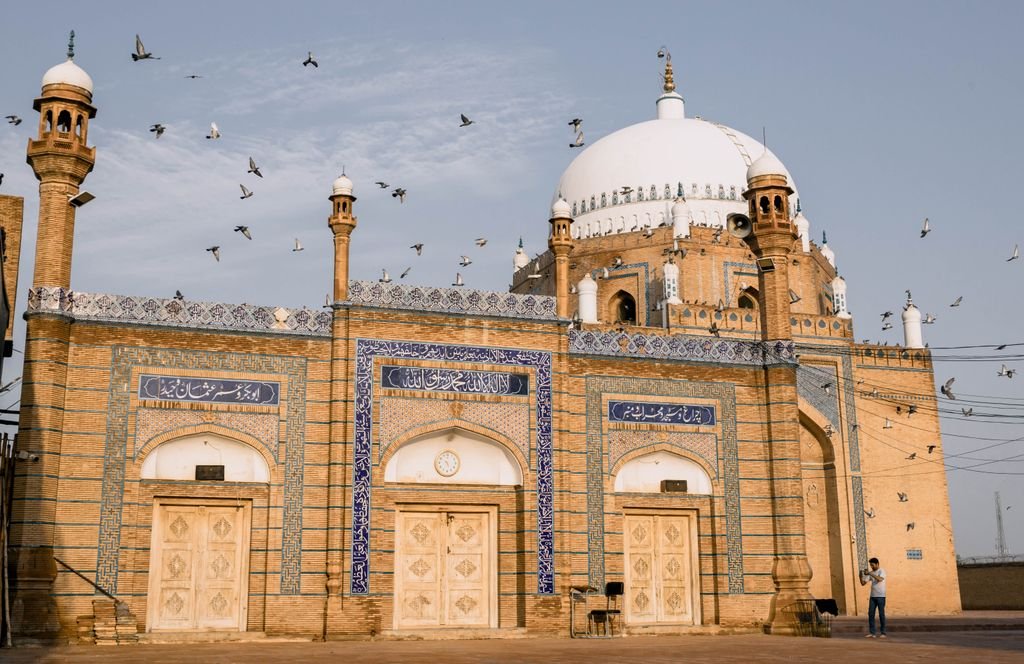
Prayer time in Multan has been called across this city for close to a thousand years, from the shrines of Shah Rukn-e-Alam and Bahauddin Zakariya through the old walled quarter. The schedule itself comes from the sun, not tradition. Multan sits further south and west than the rest of Punjab, so its day length holds steadier through the year while Maghrib arrives later than in Lahore. Namaz time in Multan is recalculated every day from the city’s own coordinates and shown with the current Hijri date, so the schedule holds for today rather than an average across the province.
Multan Prayer Time Today
Accurate Fajr, Dhuhr, Asr, Maghrib and Isha timings for Multan, Pakistan — updated live every day.
Fajr Time in Multan and the Five Daily Prayers
Fajr opens at true dawn and closes at sunrise, the tightest window of the day. Zuhr time in Multan begins once the sun has passed its zenith and the brief zawal time in Multan has ended. Asr time in Multan falls in the late afternoon and moves roughly forty minutes later under the Hanafi calculation most mosques in the city follow. Maghrib time in Multan starts as the sun drops below the open southern plain, and Isha time in Multan opens once the twilight has gone.
Voluntary Prayers and Ramadan Timings
Ishraq time in Multan arrives shortly after sunrise, while tahajjud time in Multan covers the later part of the night up to Fajr. Through Ramadan the same figures give you sehri time in Multan, which ends at Fajr, and iftar time in Multan, which begins at Maghrib. The monthly table below carries all of them together. Sunset and Maghrib are treated as the same moment here, which is standard practice across Pakistani timetables and matches how the shrines have always called it.
Frequently Asked Questions (FAQs)
Conclusion
Prayer time in Multan changes slightly throughout the year as daylight hours shift with the seasons, making an accurate daily timetable important for observing each salah on time. Whether you are checking Fajr time in Multan before dawn, planning your schedule around Zuhr and Asr, or looking up Maghrib and Isha timings in the evening, this page provides reliable and regularly updated information based on the city’s exact coordinates. During Ramadan, the same schedule also serves as a dependable guide for sehri and iftar times. Bookmark this page to stay updated with today’s prayer times in Multan, the current Hijri date, and the complete monthly namaz timetable whenever you need it.